Lesson · The rayon family
The rayon family
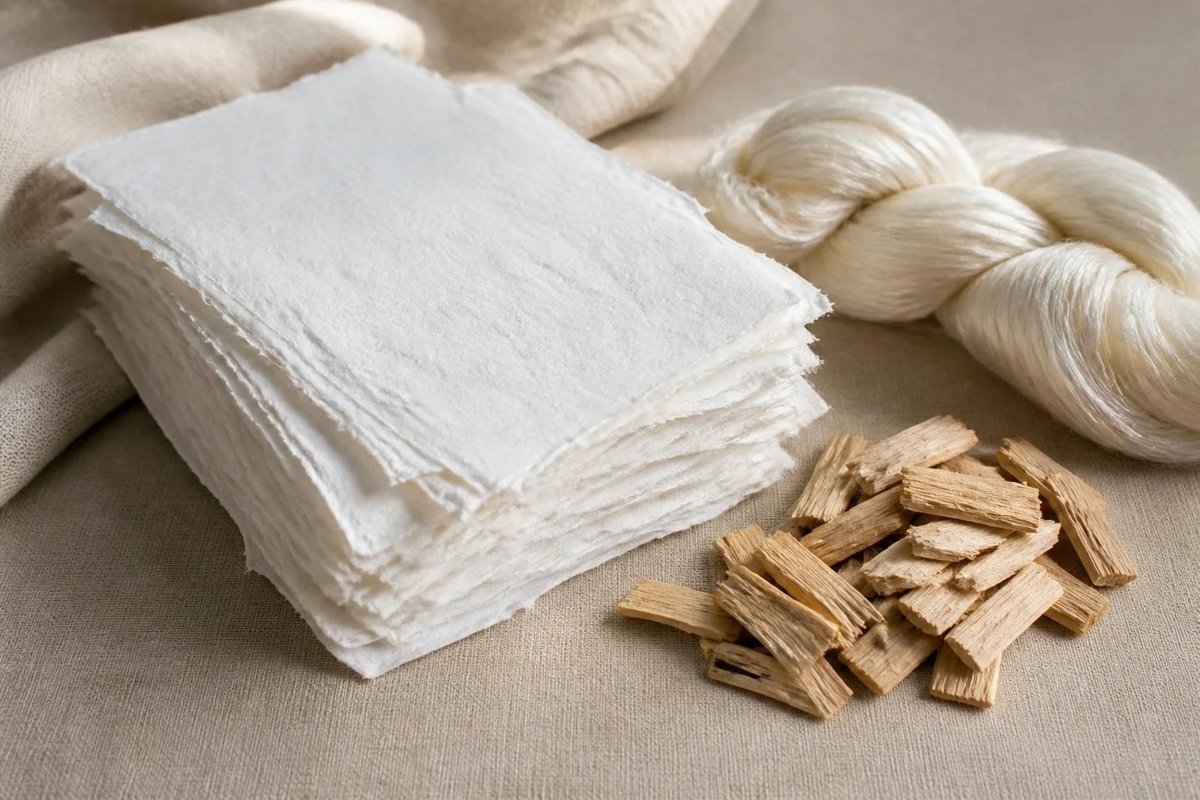
Viscose · Modal · Lyocell · Cupro- Made from trees, not oilRayon is plant cellulose, usually wood pulp, dissolved and spun back into a fiber. A natural source and a chemical process, so it’s called semi-synthetic.
- Viscose (rayon): the originalMade commercially since 1905. The usual process uses carbon disulfide, a chemical that has harmed factory workers’ health. #15 in our Fabric Ranking.
- Modal: viscose, refinedA viscose that’s stretched as it’s spun, often made from beech wood. Look for TENCEL™ Modal. #11 in our Fabric Ranking.
- Lyocell: the clean processA different solvent, with no carbon disulfide. TENCEL™ says more than 99.8% of it is recovered and reused. #7 in our Fabric Ranking.
- Cupro: the silky oneCellulose dissolved in a copper-and-ammonia solution. Silk-like to the touch, and the classic lining, often sold as Bemberg™. #10 in our Fabric Ranking.
- “Bamboo” is usually rayonUnder US rules, a fabric can only be called bamboo if it’s made directly from bamboo fiber. Otherwise the label must say “rayon (or viscose) made from bamboo.”
- The forest questionCanopy, a forest nonprofit, says more than 300 million trees a year are logged for these fabrics, some from ancient and endangered forests.
- When rayon goes wrongInvestigations found untreated wastewater from viscose factories in Indonesia, China and India running into rivers and lakes. Carbon disulfide exposure is linked to Parkinsonism, heart attack and stroke, and villagers near some factories said they stopped drinking their well water.
- What to look forLENZING™ ECOVERO™ (at least 50% less water and greenhouse gas than generic viscose, certified wood, traceable fiber), TENCEL™ Lyocell and Modal, FSC. Acetate is not rayon: a different cellulose fiber that melts under heat.
- In our ratingLyocell and cupro count as natural fibers. Viscose and modal count as certified only when the label or brand names a standard; plain viscose ranks lower. How we rate
Sources: TENCEL™ · US Federal Trade Commission · LENZING™ ECOVERO™ · Canopy via FashionUnited (2024) · Changing Markets, Dirty Fashion (2017) · Ethical Consumer · Rayon (Wikipedia) · Cuprammonium rayon (Wikipedia)