Sustainable fabrics, responsible brandsShop with intention, style what you ownFor every occasion
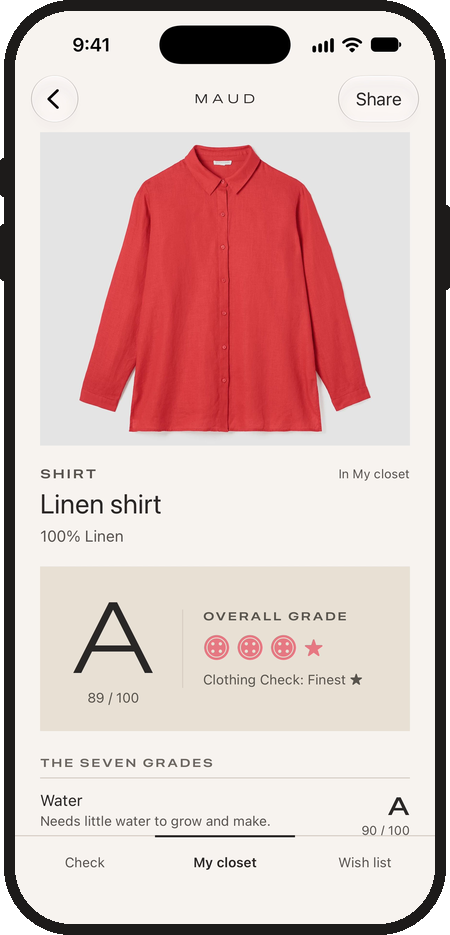 My Eco ClosetiPhone app · coming soon
Fabric School
Know what you wear
Short, sourced lessons on the fabrics behind the clothes: what they are, how they behave, and what to look for on a label.
The ranking
Fabric Ranking: for you and the planet
22 fabrics, ranked on their environmental impact and how they feel on your skin, across seven measures. Natural fibers rank above synthetics; end of life and microplastics weigh most.
- WaterWater needed to grow and make it
- ChemicalsPesticides and processing chemicals
- ClimateGreenhouse gas emissions
- DurabilityHow long it lasts in wear
- End of lifeWhether it breaks down naturally
- MicroplasticsWhether it sheds plastic fibers
- Skin & comfortBreathable, soft, kind to skin
- 1Linenflax
- 2Hemp
- 3Recycled wool
- 4Alpaca
- 5RamieChina grass
- 6Organic cotton
- 7LyocellTENCEL™
- 8Woolmerino · virgin wool
- 9Mohair
- 10CuproBemberg™
- 11Modal
- 12Silk
- 13Cashmere
- 14Cottonconventional
- 15Viscoserayon · bamboo
- 16Acetatetriacetate
- 17Recycled nylonECONYL®
- 18Recycled polyesterrPET
- 19Nylonpolyamide
- 20Polyester
- 21Acrylic
- 22Elastanespandex · Lycra®
Our summary of published research, not a lab test. The same fiber can score very differently depending on who grows and makes it; labels such as GOTS, OEKO-TEX, FSC and Masters of LINEN™ help.
Sources: Made-By Environmental Benchmark for Fibres · Higg MSI and its critics · Ethical Consumer · TENCEL™ · Alliance for European Flax-Linen & Hemp · Textile Exchange · Sustain Your Style
Lesson · Linen
Linen
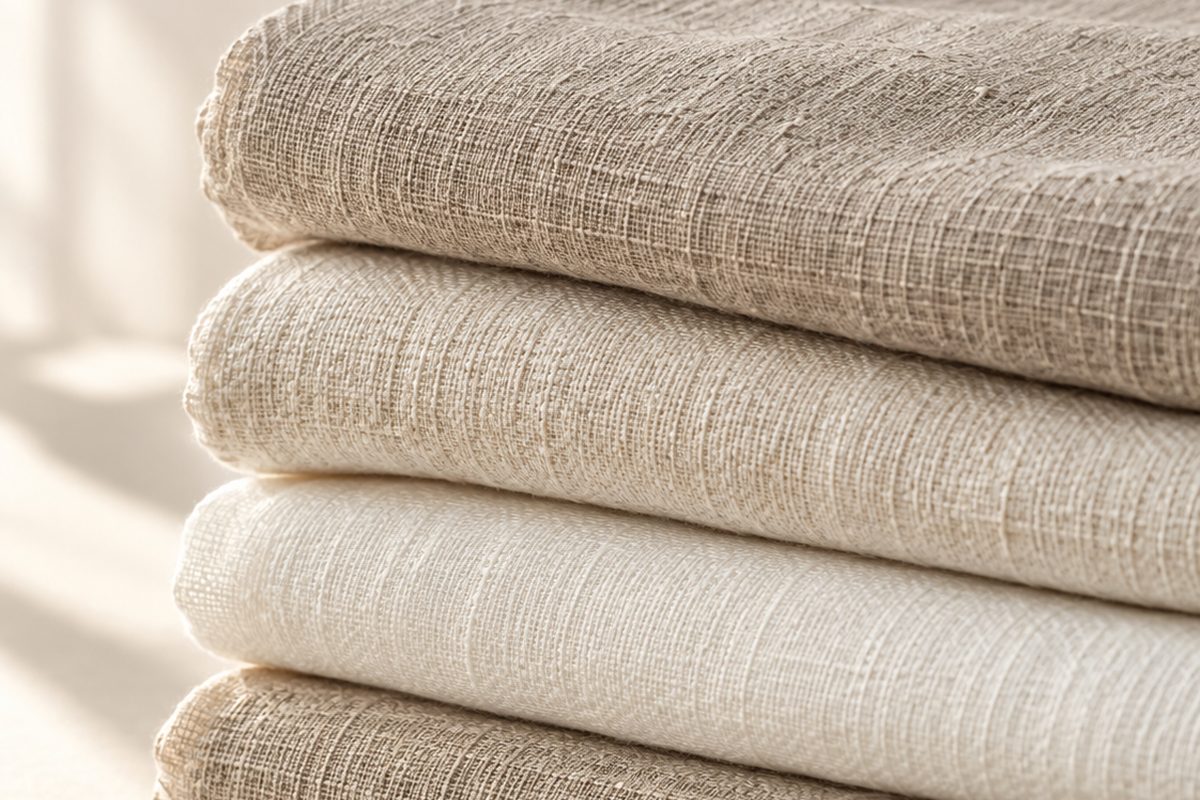
#1 in our Fabric Ranking- Flax is the plant. Linen is the cloth.Linen is woven from the long fibers inside the stem of the flax plant.
- Mostly grown in EuropeAbout three-quarters of the world’s flax grows in a coastal band from northern France to the Netherlands, usually with no irrigation.
- Nothing wastedThe stalks rest in the field while dew loosens the fibers. Every part of the plant is used: fiber, seeds and woody pieces.
- Cool and quick-dryingLinen absorbs moisture and dries faster than cotton, which is why it feels cool in the heat.
- Stronger when wetOne of the strongest natural fibers. It gains strength when wet and gets softer with every wash.
- What to look forMasters of FLAX FIBRE™: grown in Europe. Masters of LINEN™: made in Europe, field to fabric. GOTS: organic. OEKO-TEX: tested for harmful substances.
- CareWash cool, skip the dryer, iron while damp, or keep the creases. They’re part of its character.
Sources: Alliance for European Flax-Linen & Hemp · Linen (Wikipedia) · Ethical Consumer
Lesson · The rayon family
The rayon family
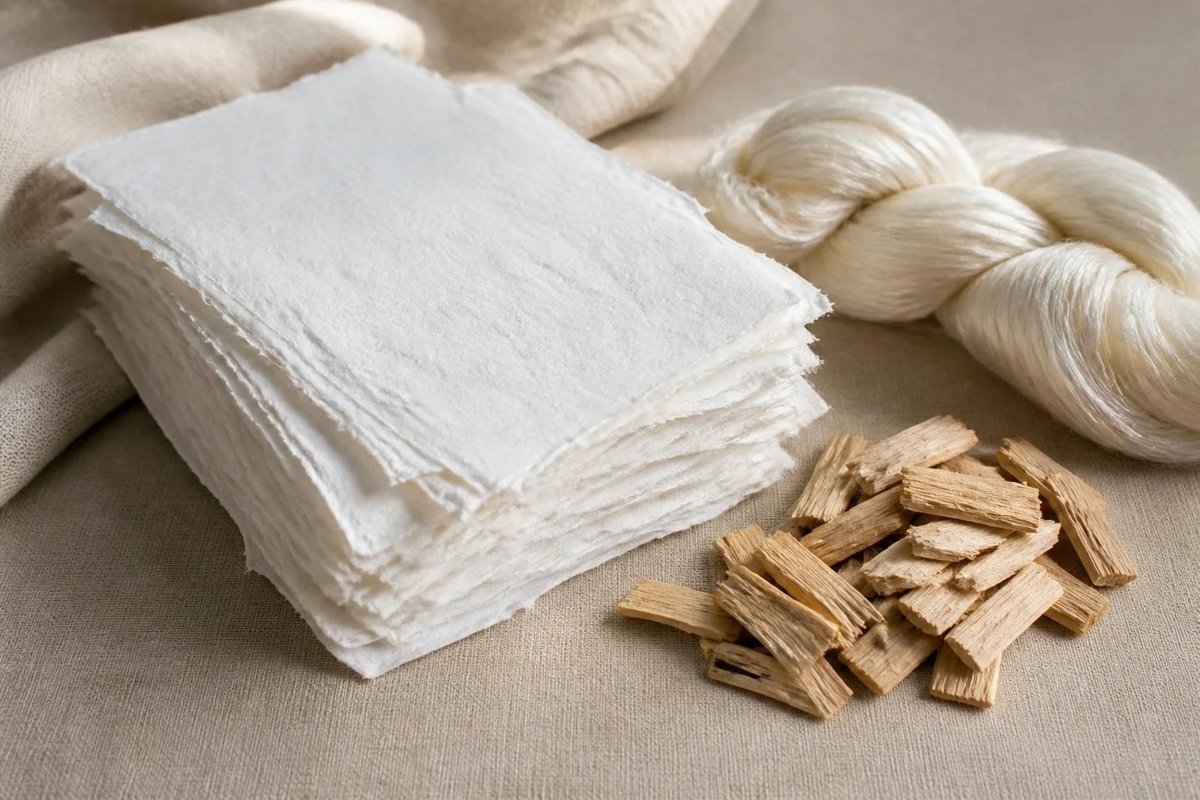
Viscose · Modal · Lyocell · Cupro- Made from trees, not oilRayon is plant cellulose, usually wood pulp, dissolved and spun back into a fiber. A natural source and a chemical process, so it’s called semi-synthetic.
- Viscose (rayon): the originalMade commercially since 1905. The usual process uses carbon disulfide, a chemical that has harmed factory workers’ health. #15 in our Fabric Ranking.
- Modal: viscose, refinedA viscose that’s stretched as it’s spun, often made from beech wood. Look for TENCEL™ Modal. #11 in our Fabric Ranking.
- Lyocell: the clean processA different solvent, with no carbon disulfide. TENCEL™ says more than 99.8% of it is recovered and reused. #7 in our Fabric Ranking.
- Cupro: the silky oneCellulose dissolved in a copper-and-ammonia solution. Silk-like to the touch, and the classic lining, often sold as Bemberg™. #10 in our Fabric Ranking.
- “Bamboo” is usually rayonUnder US rules, a fabric can only be called bamboo if it’s made directly from bamboo fiber. Otherwise the label must say “rayon (or viscose) made from bamboo.”
- The forest questionCanopy, a forest nonprofit, says more than 300 million trees a year are logged for these fabrics, some from ancient and endangered forests.
- When rayon goes wrongInvestigations found untreated wastewater from viscose factories in Indonesia, China and India running into rivers and lakes. Carbon disulfide exposure is linked to Parkinsonism, heart attack and stroke, and villagers near some factories said they stopped drinking their well water.
- What to look forLENZING™ ECOVERO™ (at least 50% less water and greenhouse gas than generic viscose, certified wood, traceable fiber), TENCEL™ Lyocell and Modal, FSC. Acetate is not rayon: a different cellulose fiber that melts under heat.
- In our ratingLyocell and cupro count as natural fibers. Viscose and modal count as certified only when the label or brand names a standard; plain viscose ranks lower. How we rate
Sources: TENCEL™ · US Federal Trade Commission · LENZING™ ECOVERO™ · Canopy via FashionUnited (2024) · Changing Markets, Dirty Fashion (2017) · Ethical Consumer · Rayon (Wikipedia) · Cuprammonium rayon (Wikipedia)
Fabric notes
* Rayon (viscose)
Rayon is made from plant cellulose, usually wood pulp, turned into fiber with chemicals. It is plant-based, breathable and biodegradable. Its impact depends on how it is made: conventional rayon can come from endangered forests and uses chemicals that can harm workers and rivers. Better versions use certified wood (FSC) or closed-loop processes, such as LENZING™ ECOVERO™ or lyocell (TENCEL™). Look for these names on the label. Read the full lesson
Coming next: fabric names and what they can be made of.