Lesson · Microplastics
Microplastics in clothes
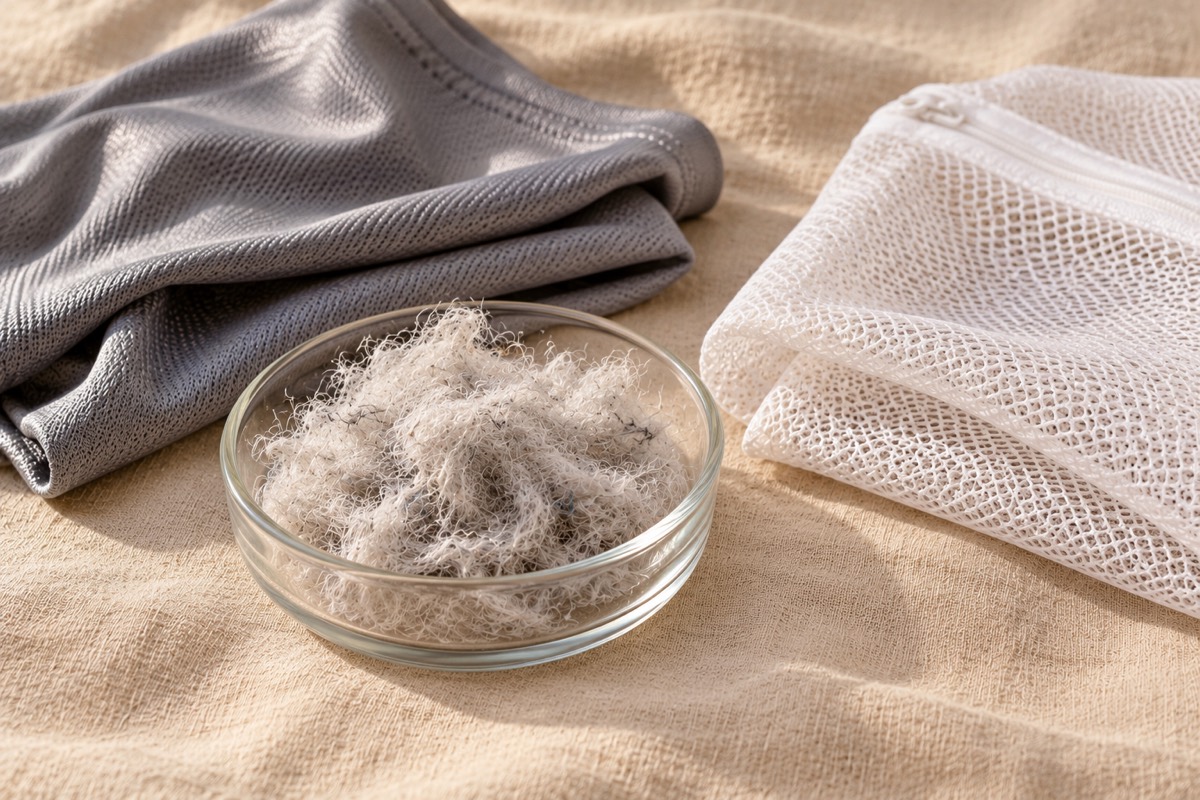
Microplastics: 20% of every gradeEvery time synthetic clothes are washed, they shed tiny plastic fibers. Many are small enough to slip through washing machines and water treatment.
- Which clothes shed microplastics?Anything made of plastic-based fibers: polyester, nylon (polyamide), acrylic, elastane (spandex), polypropylene. Recycled polyester and nylon shed too. More on polyester
- How much?In one test, a 6 kg wash released about 729,000 fibers from acrylic, 496,000 from polyester, and 138,000 from a polyester-cotton blend (University of Plymouth, 2016).
- Where do they go?Into wastewater, rivers and the sea. Washing synthetic clothes is estimated to cause about 35% of the tiny plastic that is released into the oceans as microplastic (IUCN, 2017). That makes it the biggest single source in that study.
- Do natural fabrics shed too?Yes, all fabrics shed fibers. But cotton, linen, wool and rayon fibers aren’t plastic, and they break down. In water, cotton fibers lost 74% of their weight in 220 days, and polyester lost only 6% (NC State).
- Are microplastics from clothes harmful to us?Research on health effects is still early. What’s clear is that plastic fibers last for decades in water, soil and food chains.
- Workout and baby clothes?Activewear is mostly polyester, nylon and elastane, so it sheds. For baby clothes, many parents choose organic cotton, which doesn’t shed plastic.
- How to shed less· Wash less often.
· Choose quick, cool cycles: they cut fiber release by up to 52% (University of Leeds, 2020).
· Run full loads and skip the delicate cycle: its extra water released about 800,000 more fibers per wash (Newcastle University, 2019).
· Use a catching bag (about 54% less) or a machine filter (about 78% less) (University of Plymouth, 2020).
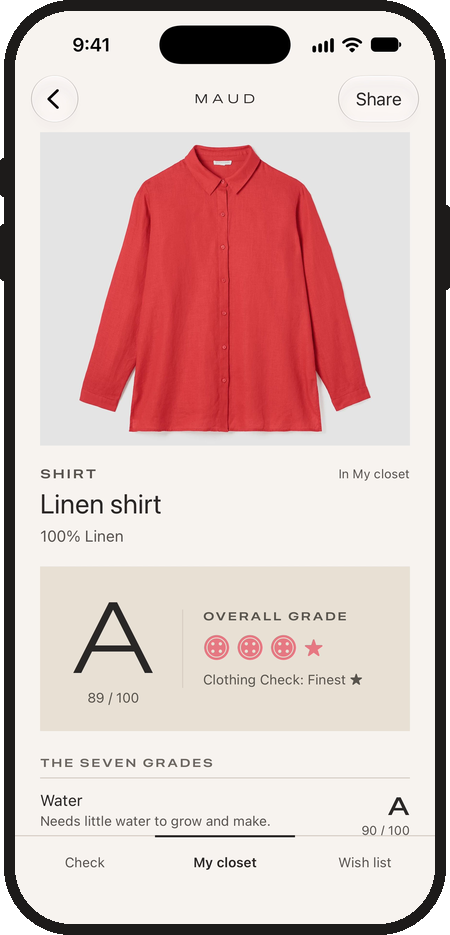
· Buy synthetics that last, and choose natural fibers where you can. - In our gradesMicroplastics counts for 20% of the overall grade, tied with Back to nature as the heaviest measure. Every natural fiber, plus lyocell, modal, viscose and cupro, gets an A. Every plastic-based fiber gets a D. Acetate, a wood-based fiber, gets a C. How we grade · Check a piece with the Clothing Check
Sources: Napper & Thompson 2016, University of Plymouth · IUCN, Primary Microplastics in the Oceans (2017) · Zambrano et al. 2019, NC State · University of Leeds 2020 · Newcastle University 2019 · Napper et al. 2020, University of Plymouth · Ecobalyse