Lesson · Polyester
Polyester
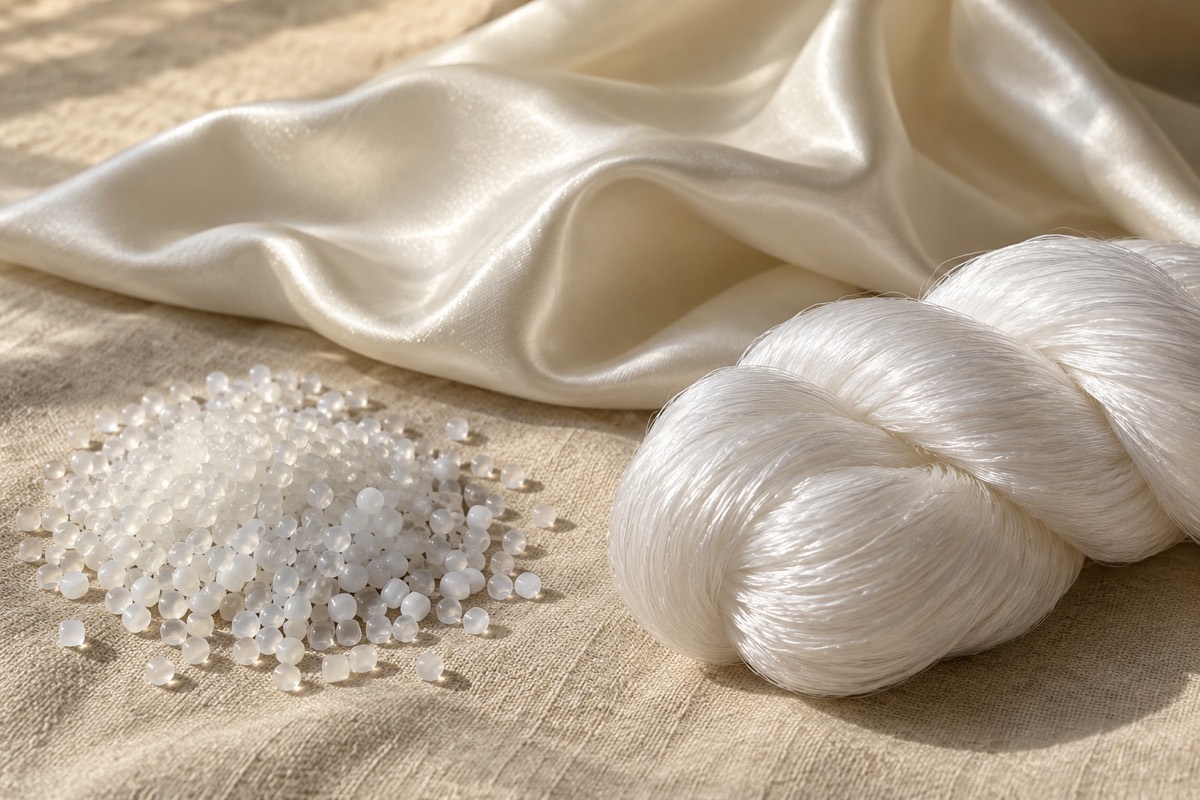
#20 in our Fabric RankingThe most-used fiber in clothing. It’s a plastic, made from oil, and it’s strong and cheap, which is why it’s everywhere.
- What is polyester?A plastic (PET, the same family as plastic bottles), melted and spun into fiber. It’s synthetic: no plant or animal in it.
- Is polyester bad for the environment?It doesn’t break down. In a study of fibers in water over 220 days, polyester lost only 6% of its weight, against 74% for cotton (NC State). Its climate footprint is also high and disputed: published studies range from 2.3 to 27 kg CO₂e per kg of fiber.
- Does polyester shed microplastics?Yes, every wash. In one test, a 6 kg wash of polyester released about 496,000 fibers (University of Plymouth). More on microplastics
- Is polyester bad for your skin?It barely absorbs moisture (0.4%, against 8.5% for cotton), so it traps sweat and heat and holds on to odor. Polyester is colored with disperse dyes, the most common textile dye allergens. Allergies are uncommon, but they do happen, usually where the fabric rubs.
- Is polyester bad to sleep in, or for underwear?For the same reason, it can feel hot and clammy close to skin. For sheets, sleepwear and underwear, breathable fibers like cotton, linen or lyocell are kinder.
- What about recycled polyester?Better for climate (45–70% lower emissions than virgin), but it still sheds microplastics and is hard to recycle again. In our grades it’s a C, still well below natural fibers.
- What’s good about polyester?It’s very durable (A), and it needs little water to make (A). That’s honest: its harm shows up in the other measures.
- Our grades (A–D)Overall D · Water A · Chemicals D · Climate D · Durability A · Back to nature D · Microplastics D · Skin & comfort D. How we grade
- What to look forNatural fibers, or lyocell, for things worn close to skin. If you buy polyester, buy it to last. Wash it less often, cooler and with fuller loads, and use a bag or filter that catches microfibers. Check a piece with the Clothing Check
Sources: Napper & Thompson 2016, University of Plymouth · Zambrano et al. 2019, NC State · Sustain Your Style · Shuvo 2020, moisture regain · DermNet, textile dye allergy · Ecobalyse